Korean Bibimbap
Highlighted under: Traditional World Food Favorites
Korean Bibimbap is a vibrant and delicious mixed rice dish topped with a variety of vegetables, meat, and a fried egg, all stirred together with spicy gochujang sauce.
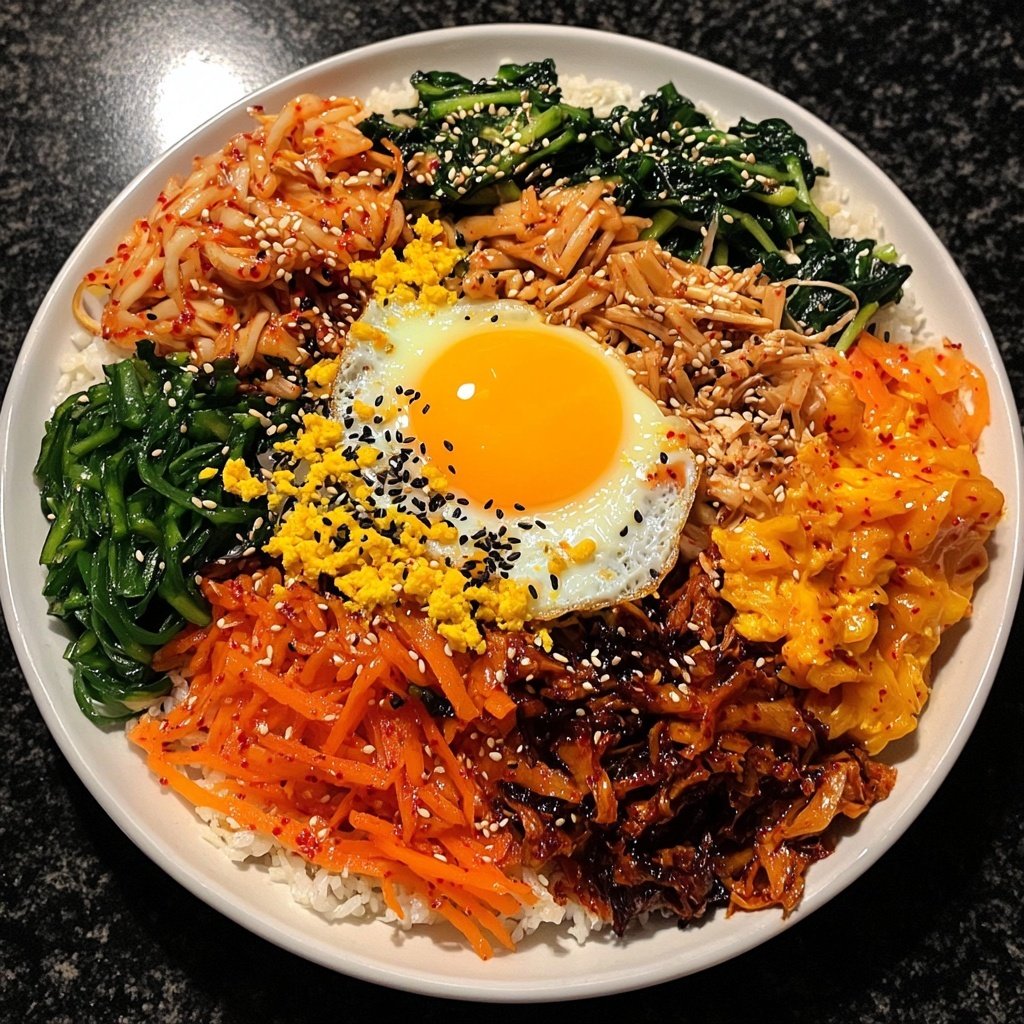
Bibimbap is a beloved Korean dish that brings together a rainbow of flavors and textures. Each ingredient contributes to a harmonious blend that makes this dish both satisfying and nutritious.
Why You Will Love This Recipe
- Delicious harmony of flavors from fresh vegetables and savory meat
- Customizable with your favorite toppings and sauces
- A feast for the eyes with its colorful presentation
A Colorful Medley of Ingredients
Korean Bibimbap is not just a meal; it's an experience that celebrates the beauty of fresh ingredients. The dish features a stunning array of vegetables, each bringing its unique color and flavor to the table. You'll find vibrant greens from spinach, bright orange from carrots, and refreshing yellow from zucchini. This colorful combination doesn't just please the eye; it also packs a nutritional punch, providing essential vitamins and minerals in every bite.
The beauty of Bibimbap lies in its versatility. You can customize it according to your preferences, whether you prefer a vegetarian version or want to add your favorite protein. Ingredients like mushrooms, radishes, or even tofu can easily be swapped in or out, making this dish a canvas for your culinary creativity. It's a wonderful way to utilize seasonal produce or leftovers, reducing waste while still crafting a delicious meal.
The Heartwarming Tradition of Bibimbap
Bibimbap has deep roots in Korean culture, often associated with communal dining and sharing. Traditionally served in a hot stone bowl, the sizzling rice at the bottom creates a delightful crispy layer known as 'nurungji'. This dish is often enjoyed during celebrations and gatherings, symbolizing harmony and balance among different flavors and textures. Making Bibimbap at home allows you to embrace this tradition and share it with family and friends in a warm and inviting atmosphere.
The preparation of Bibimbap is a great opportunity to bring people together. Cooking each ingredient can be a fun group activity, allowing everyone to participate in creating their own bowl. This interactive dining experience encourages conversation and connection, making it more than just a meal but a shared moment of joy.
Tips for Perfecting Your Bibimbap
To elevate your Bibimbap, consider using short-grain rice for that perfect sticky texture. This type of rice holds together well, making it easier to mix with other ingredients. Additionally, don't skimp on the gochujang; its spicy, savory flavor is what ties the dish together. Adjust the amount according to your heat preference for a personalized touch.
For added depth of flavor, try marinating the beef with a bit of garlic, ginger, and sugar before cooking. This will enhance the umami notes and create a more satisfying bite. Remember to serve your Bibimbap immediately after assembling to enjoy the contrasting textures and temperatures of the warm rice, sautéed vegetables, and runny egg.
Ingredients
For the Bibimbap
- 2 cups cooked rice
- 1 cup spinach, blanched
- 1 carrot, julienned
- 1 zucchini, julienned
- 1 cup bean sprouts, blanched
- 4 eggs
- 200g beef, thinly sliced
- 2 tablespoons soy sauce
- 2 tablespoons sesame oil
- 1 tablespoon gochujang (Korean chili paste)
- Sesame seeds, for garnish
- Green onions, chopped, for garnish
Feel free to add or substitute vegetables according to your preference!
Instructions
Prepare the Vegetables
In a pan, heat a tablespoon of sesame oil and sauté the carrots, zucchini, and spinach separately for 2-3 minutes each. Set aside.
Cook the Beef
In the same pan, add sliced beef and soy sauce, cooking until browned and fully cooked, about 5-7 minutes.
Fry the Eggs
In another pan, fry the eggs sunny-side up, keeping the yolks runny.
Assemble the Bibimbap
In a bowl, place a serving of rice, top with sautéed vegetables, cooked beef, and a fried egg. Drizzle with gochujang and garnish with sesame seeds and green onions.
Serve
Mix all ingredients together before eating to enjoy the full flavor!
Serve immediately for the best taste!
Pro Tips
- Adjust the level of spiciness by adding more or less gochujang according to your taste.
Nutritional Benefits of Bibimbap
Bibimbap is not only delicious but also packed with nutrients. The variety of vegetables included contributes to a balanced diet, offering essential vitamins such as Vitamin A from carrots and Vitamin C from spinach. The protein from the beef and eggs helps in muscle repair and growth, making this dish both satisfying and nourishing.
Moreover, the inclusion of sesame oil and seeds provides healthy fats that can promote heart health. This dish is a wonderful way to enjoy a wholesome meal that supports your overall well-being while tantalizing your taste buds.
Variations of Bibimbap
While traditional Bibimbap features beef, there are numerous variations to suit different dietary preferences. For instance, you can use marinated chicken or crispy tofu for a vegetarian option. Seafood Bibimbap, which includes shrimp or octopus, offers a delightful oceanic flavor that can be quite refreshing during warmer months.
You can also experiment with different sauces besides gochujang. A drizzle of soy sauce or a sesame dressing can add a unique twist to the classic recipe, allowing you to explore various flavor profiles while keeping the essence of Bibimbap intact.
Questions About Recipes
→ Can I make Bibimbap vegetarian?
Absolutely! Simply omit the beef and add more vegetables or tofu for protein.
→ What kind of rice should I use?
Short-grain rice is traditional, but you can use any rice you prefer.
→ Can I prepare the ingredients in advance?
Yes! You can pre-cook the vegetables and beef, storing them in the refrigerator for a few days.
→ Is Bibimbap spicy?
The level of spiciness depends on how much gochujang you add. You can adjust it to suit your taste.
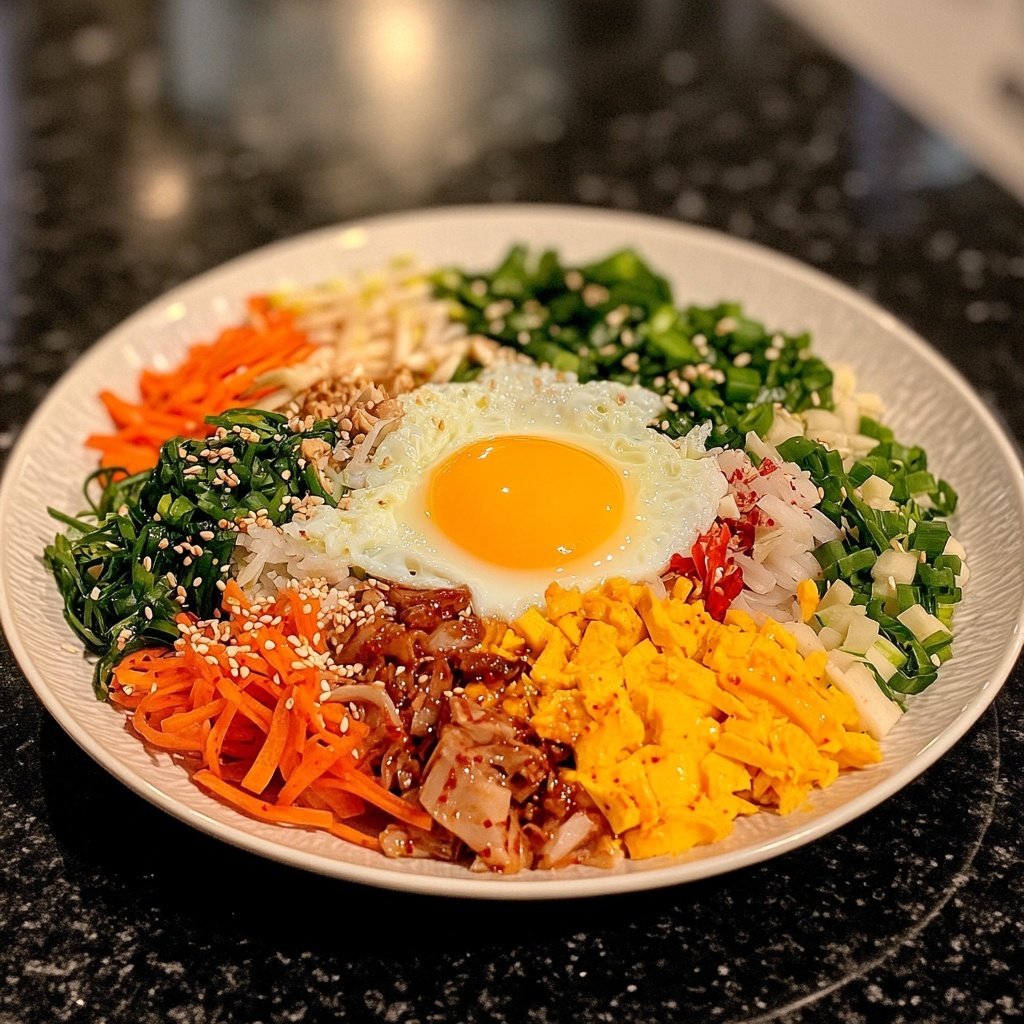
Korean Bibimbap
Created by: Lauren Mitchell
Recipe Type: Traditional World Food Favorites
Skill Level: Intermediate
Final Quantity: 4 servings
What You'll Need
For the Bibimbap
- 2 cups cooked rice
- 1 cup spinach, blanched
- 1 carrot, julienned
- 1 zucchini, julienned
- 1 cup bean sprouts, blanched
- 4 eggs
- 200g beef, thinly sliced
- 2 tablespoons soy sauce
- 2 tablespoons sesame oil
- 1 tablespoon gochujang (Korean chili paste)
- Sesame seeds, for garnish
- Green onions, chopped, for garnish
How-To Steps
In a pan, heat a tablespoon of sesame oil and sauté the carrots, zucchini, and spinach separately for 2-3 minutes each. Set aside.
In the same pan, add sliced beef and soy sauce, cooking until browned and fully cooked, about 5-7 minutes.
In another pan, fry the eggs sunny-side up, keeping the yolks runny.
In a bowl, place a serving of rice, top with sautéed vegetables, cooked beef, and a fried egg. Drizzle with gochujang and garnish with sesame seeds and green onions.
Mix all ingredients together before eating to enjoy the full flavor!
Extra Tips
- Adjust the level of spiciness by adding more or less gochujang according to your taste.
Nutritional Breakdown (Per Serving)
- Calories: 600 kcal
- Total Fat: 30g
- Saturated Fat: 10g
- Cholesterol: 275mg
- Sodium: 700mg
- Total Carbohydrates: 70g
- Dietary Fiber: 5g
- Sugars: 4g
- Protein: 25g